
EVENT HAS ENDED
Technology to Improve Learning:
A Public Engagement Project
Event has ended
April 23, 2021
10:00 am EST - 1:00 pm EST
Virtual Workshop | Free
For more information, contact Carolyn Rose at cprose@cs.cmu.edu
Sponsored by the American Association for the Advancement of Science
WORKSHOP AGENDA:
10:00am
Welcome
10:10am - 10:45am
Collaborative Focus Setting
In this interactive panel session, workshop participants will have the opportunity to voice main points and prioritize among potential topics of engagement represented within the expertise of panelists. Selected topics will be the focus of panel working sessions for the remainder of the workshop.
10:45am - 10:55am
10 min Break
10:55am - 11:00am
Share out from panel reps about focus of breakout
11:00am - 12:00pm
Parallel Working Panel Session
Each panel session features Panel Talks + QA and collaborative brainstorming and writing, as a partnership between panelists and workshop attendees
Panel 1: Personalize Learning Using Science And Technology
Panel 2: Adapt Teaching In Context
Panel 3: Diversify Education And Provide Equitable Access
12:00pm
10 min Break
12:10pm -12:40pm
Share out from Panel Break outs + discussion
12:40pm - 12:55pm
IAALDE overview and Next Steps Planning
12:55pm - 1:00pm
Thank you and closing
WORKSHOP DESCRIPTION:
As we begin to emerge from COVID 19, perhaps more than ever before, we, as a society, are grappling with envisioning the future of education. We invite you to a public engagement project that is meant to engage Primary, Secondary, and Post-secondary education administrators, policy makers/implementors and researchers in an emerging partnership. We have assembled a panel of experts from across 10 different research societies. This will be a highly interactive and collaborative workshop. We will adopt an interactive panel format to offer participants the opportunity to hear about research from a broad spectrum of experts as well as the opportunity to offer, in response, key insights from practice that will inform new directions of the research. Our overarching aim is to bring more synergy between research and practice. Through this synergy, we hope to work together, to envision translation and implementation that are co-constructed through the interaction between the expert panels and the invited participants.
Administrators and policy makers/implementors of policy are invited to engage with world class leading researchers across a broad spectrum of research in technology enhanced learning to accelerate the path from research into real educational impact through practice. The work going forward would benefit tremendously from increased grounding from the lived experiences of administrators and implementors of policy in schools. At the same time that greater awareness of research findings might offer opportunities to reflect and reconsider practices on the ground in schools. This discussion lays the foundation for documents, resources, and activities to move the conversation forward.
The workshop is organized by the International Alliance to Advance Learning in a Digital Era, a not-for-profit alliance of over 3,000 researchers worldwide dedicated to learning and technology and the scientific advancement and practical understanding of how learners learn,and how technology can support education, and how to teach to bring these together effectively.
Panel 1:
Personalize Learning Using Science and Technology
In the wake of the emergency shift to online learning, we are more keenly aware of the need to make strategic decisions about which technologies will best meet the needs of students. Success stories have been published regarding technologies purporting to offer learning experiences to students that are cognitively and emotionally engaging, especially those offering intelligent sensing and support. Nevertheless, results in practice vary depending upon how the technologies are integrated with specific curricula and classroom practices. This panel explores the role of teacher and student in effective classroom learning with technology and seeks to promote research-educator partnerships for navigating published findings and available technologies as part of a collaborative curricular decision making process.

Dr. Marcela Borge
Dr. Marcela Borge is an assistant professor in the Learning, Design, and Technology program in the College of Education at the Pennsylvania State University. Her research focuses on unpacking group cognition, engagement, and student needs in order to design new models of interaction and tools to enhance collective cognitive processes.

Dr. Maiga Chang
Dr. Maiga Chang is Full Professor in the School of Computing and Information Systems at Athabasca University, Canada and the Chair of IEEE Technical Committee of Learning Technology. Dr. Chang has been doing award winning work on advanced learning technologies and game-based learning research for two decades, with impact on problem solving, associative reasoning, planning and organization, evaluation and accuracy.

Dr. Tobias Ley
Dr. Tobias Ley is a Professor of Learning Analytics and Educational Innovation at the School of Educational Sciences at Tallinn University. He leads an interdisciplinary Research group on Learning Analytics and Educational Innovation made up of researchers in education, psychology and ICT. His research brings together cognitive and contextualized approaches to learning and technology.

Dr. Alexandra List
Dr. Alexandra List is an Assistant Professor of Educational Psychology at The Pennsylvania State University. Her research focuses on students’ learning from multiple texts, for instance when researching complex topics on the Internet, and the higher-order cognitive processes involved (e.g., source evaluation, integration), as well as in students’ learning from non-textual (e.g., videos, data visualizations) media.

Dr. Anna Rafferty
Dr. Anna Rafferty is an associate professor of computer science at Carleton College. Her work addresses questions at the intersection of machine learning, computational cognitive science, and education, with a focus on applications of reinforcement learning methods to adaptive educational technologies. She is a member of the board of the International Educational Data Mining Society.

Dr. Joan Walker
Dr. Joan Walker currently serves as Associate Professor (School of Education) and Interim Associate Provost for Academic Affairs at Pace University. She also holds an Expert appointment in the National Science Foundation’s Education and Human Resources Directorate. Grounded in her deep understanding of how interpersonal relationships support children’s learning and development, she designs and tests a range of simulations of professional practice to examine the role that “soft skills” play in the development of teaching expertise.

Dr. Beverly P. Woolf
Dr. Beverly Woolf has more than 20 years experience in educational computer science research, production of intelligent tutoring systems and development of multimedia systems. She is author of the 2009 book Building Intelligent Interactive Tutors and is the (co)author of over 150 technical papers. She has delivered tutorial, training programs and keynote addresses and served on panels in more than twenty countries.
Panel 2:
Adapt Teaching in Context
This panel comprises researchers across communities, many of whom have worked closely in partnership with educators, administrators, and policy people. With a particular focus on the issue of social isolation in online learning, this panel takes a critical look at itself, considering learning as it is contextualized in the lived experiences of educators and students through COVID 19. Processes of translation from research to practice have been forged through past efforts, but these pathways that have been effective at meeting real needs in earlier times may need to be reconsidered in light of the realities we have seen in the past year as the context for much of learning has shifted suddenly. The panel therefore explores paths forward to achieve resilience in the face of emergency transitions and disruption in order to mitigate disproportionate negative effects on vulnerable populations.

Dr. Mutlu Cukurova
Dr. Mutlu Cukurova is an Associate Professor of Learning Technologies at University College London. His work broadly addresses the pressing social-educational challenge of preparing people for a future that will require a great deal more than the routine cognitive skills currently prized by many education systems. Besides, he is in UNESCO's Digital Learning and UCL’s Grand Challenges on Transformative Technologies working groups, an Editor of the British Journal of Educational Technology and an Associate Editor of the International Journal of Child-Computer Interaction.
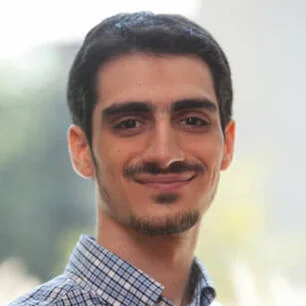
Dr. Shayan Doroudi
Dr. Shayan Doroudi is an Assistant Professor in the School of Education and (by courtesy) Department of Informatics at the University of California at Irvine. His research is at the intersection of the learning sciences, educational technology, and educational data science. One of his interests is in studying how computational models can be constructed to give insights on situated and constructivist accounts of learning and the difficulties in doing so.

Dr. Deanna Kuhn
Dr. Deanna Kuhn is a Research Professor of Psychology and Education who is world famous for research on using technology to support development of thinking skills, problem-based learning, collaborative thinking, and discourse.

Dr. Doug Lombardi
Dr. Doug Lombardi is an Associate Professor, Department of Human Development and Quantitative Methodology, University of Maryland. As the head of the Science Learning Research Group, he conducts research examining reasoning and critical thinking about knowledge claims. Much of this research is situated within the context of formal classroom settings and focuses on effective teaching tools and strategies to support deep learning, particularly about scientific topics that pose local, regional, and global challenges (e.g., causes of current climate change, availability of freshwater resources).

Dr. Viktoria Pammer-Schindler
Dr. Viktoria Pammer-Schindler is an associate professor at Graz University of Technology and area head at the Know-Center. Her research is on designing and evaluating socio-interventions for workplace learning and knowledge work; and sits at the intersection of technology-enhanced learning, human-computer interaction and information system research. Viktoria is president of the International Alliance to Advance Learning in the Digital Era (IAALDE) and member of the European Association of Technology-Enhanced Learning (EATEL)’s managing committee.
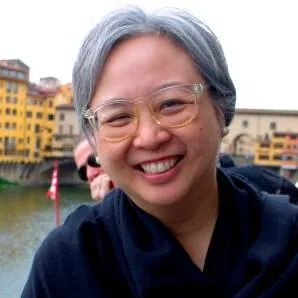
Ma. Mercedes T. Rodrigo
Dr. Mercedes T. Rodrigo is a Professor of Information Systems and Computer Science at Ateneo de Manila University. She has written extensively on the problem of equity in education from a sociocultural perspective, especially in marginalized contexts. Much of her research has focused on study of the factors that lead to or perpetuate inequalities in access to education.

Dr. Stephanie D. Teasley
Dr. Stephanie Teasley is a Research Professor in the School of Information at the University of Michigan where she directs the Learning, Education & Design Lab. Her research focuses on issues of collaboration and learning, looking specifically at how sociotechnical systems can be used to support effective collaborative processes and successful learning outcomes. She is the past president of the Society for Learning Analytics Research (SoLAR) and a Distinguished Member of the ACM.
Panel 3:
Diversify Education and Provide Equitable Access
Issues regarding equitable access to high quality educational experiences have become more pronounced in the wake of COVID 19. A full solution requires action at multiple levels and from multiple sectors. This panel addresses specific equity concerns raised when intelligent technologies are introduced into the classroom, whether in-person, virtual or in hybrid contexts, and across K-16 and beyond learning contexts. Introduction of technologies powered by AI open up the possibility of biases and inequities being introduced if care is not taken in considering (a) how developers construct those technologies, (b) when and how equity, diversity, inclusion, and access are considerations in design, refinement, or use testing and implementation. Research informing best practices exists but is not always applied, sometimes because of limitations placed on policies and concerns regarding privacy and data ownership. This panel explores a cost-benefit analysis in terms of decision-making regarding data handling practices and what is or is not afforded in terms of promoting equity (mitigating harmful bias of algorithmic unfairness). We will explore these issues in K12 as well as higher ed, STEM as well as literacy.
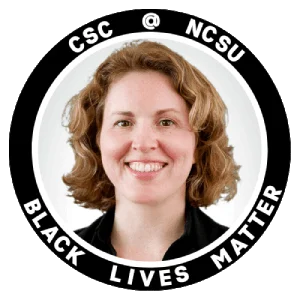
Dr. Tiffany Barnes
Dr. Tiffany Barnes is a Professor of Computer Science at North Carolina State University and Founding Co-Director of the STARS Computing Corps, a Broadening Participation in Computing Alliance funded by the National Science Foundation. She is a Distinguished Member of the Association of Computing Machines (ACM). Her internationally recognized research program focuses on transforming education with AI-driven learning technologies and research on equity and broadening participation, impacting thousands of K20 students.

Dr. Linda Corrin
Dr. Linda Corrin is Associate Professor, Learning Analytics and Director, Learning Transformations Unit at Swinburne University of Technology in Australia. She has 20 years of experience working in higher education and has taught in the fields of education, business, and IT. Her research interests include learning analytics, educational technology, feedback, and learning design. She is currently working on several research projects exploring how learning analytics can be used to provide meaningful and timely feedback to academics and students.
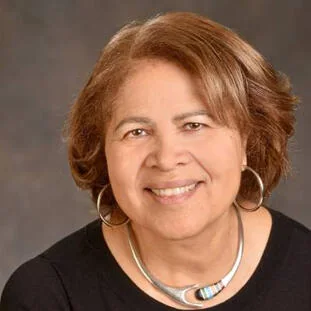
Dr. Kimberley Gomez
Dr. Kimberley Gomez is a Professor in the Urban Schooling Division in the Department of Education at UCLA, and is jointly appointed in the Information Studies Department at UCLA. She is the Principal Investigator on a National Science Foundation Computer Science for All: Researcher-Practitioner Partnership (RPP) grant that focuses on how to effectively teach problem solving practices in 3rd – 4th grade computer science classes, in low-income communities.

Dr. Marco Kalz
Dr. Marco Kalz is full professor of technology-enhanced learning at the Heidelberg University of Education. His research interest lies on the use of open education, pervasive technologies and formative assessment to support learning and knowledge construction.

Dr. Rene Kizilcec
Rene Kizilcec is an Assistant Professor of Information Science at Cornell University, where he directs the Future of Learning Lab. He studies the use and impact of technology in formal and informal learning environments and scalable interventions to broaden participation and reduce achievement gaps.

Dr. Rita Ndagire Kizito
Dr. Kizito spent almost 40 years in different education sectors including high school, teacher training, Open Distance Learning and higher education. Inspired by theorists interested in using practical approaches to learning activity design, Dr. Kizito subscribes to a non-dualist approach to interaction. This is an activity shaped by discourse as a marker for human learning and development. She believes that the ability to trace our marked discourses forging future learning can shape our contributions to learning development.

Dr. Collin F. Lynch
Dr. Collin F. Lynch is an Assistant Professor of Computer Science at North Carolina State University. His research is focused on educational data mining, the development of robust adaptive systems for Ill-Defined domains such as writing, law, and software development. Dr. Lynch Policy Chair for the International Educational Data Mining society. In this capacity he studies policy and ethical issues in educational data mining including work on fairness, accountability and transparency.

Dr. Jon Mason
Dr. Jon Mason is Assistant Dean International & a Senior Lecturer in the College of Education specializing in digital technologies. His research focuses on data literacy, questioning, sense-making and digital futures. Jon holds Master's degrees in Cognitive Science and Knowledge Management and a PhD in Education. He has an extensive publication record and a background in international standardization.

Dr. Kathryn S. McCarthy
Dr. Kathryn McCarthy is an Assistant Professor of Educational Psychology in the Department of Learning Sciences at Georgia State University. Her research examines the cognitive processes involved in comprehension and how these processes vary across different learners and disciplines. She is interested in how technology can be used to study learning as it unfolds and how it can be leveraged to provide personalized instruction and feedback.

Dr. Jill-Jênn Vie
Dr. Jill-Jênn Vie is a researcher at Inria, France. He is a board member of the French Computer Science Society (SIF), a member of the French IT Society for Education & Training (ATIEF) and the General Chair of the upcoming Educational Data Mining 2021 conference. His research focuses on adaptive assessment & student modeling for optimizing human learning, with an interest in fair & privacy-preserving technologies.
PARTICIPANTS AT LARGE

Dr. Panayiota (Pani) Kendeou
Dr. Kendeou is a Professor of Educational Psychology and an expert on debunking misinformation. She directs the Reading + Learning Lab and co-directs the CEHD Learning Informatics Lab, both at the University of Minnesota where she studies how to effectively reduce the impact of misinformation about socio-scientific topics, such as vaccines, climate change, and autism we often encounter during reading.

Dr. Kenneth Koedinger
Dr. Koedinger is a professor of Human Computer Interaction and Psychology at Carnegie Mellon University. His multidisciplinary background supports his research goals of understanding human learning and creating educational technologies that increase student achievement. His research has contributed new principles and techniques for the design of educational software and has produced basic cognitive science research results on the nature of student thinking and learning.
Workshop Organization

Dr. Carolyn Penstein Rosé
Dr. Carolyn Rosé is a Professor in the School of Computer Science at Carnegie Mellon University and Founding Chair of IAALDE. Her research is published in top venues of 5 fields: Language Technologies, Learning Sciences, Cognitive Science, Educational Technology, and Human-Computer Interaction, with awards in 3 of these fields. She is a Past President and Inaugural Fellow of the International Society of the Learning Sciences and Co-Editor-in-Chief of the International Journal of Computer-Supported Collaborative Learning.